








Are Slot Machines Rigged? RNG, RTP and Slot Fairness Explained

One of the most common questions people ask when considering playing casino games is, are slot machines rigged? This is especially true if you are new to playing online slots.
Since slots are among the most popular casino games, it’s important to address this misconception, which often arises from a misunderstanding of game mechanics.
Players can interpret losing streaks or infrequent big wins as manipulation. Humans naturally look for patterns in random events, and many players do not fully understand how RTP and RNG maintain fairness over the long term.
In this article we’ll explore the concepts every player should know, such as house edge, how slot machines determine outcomes, whether they can be manipulated, and what actually affects the mechanics behind online casino slots.

What is House Edge?
Before getting into the topic, we need to understand the term house edge and how it affects the whole ‘slots-being-stacked’ narrative.
House edge is the mathematical advantage that ensures the casino always profits over time, expressed as a percentage of every bet placed.
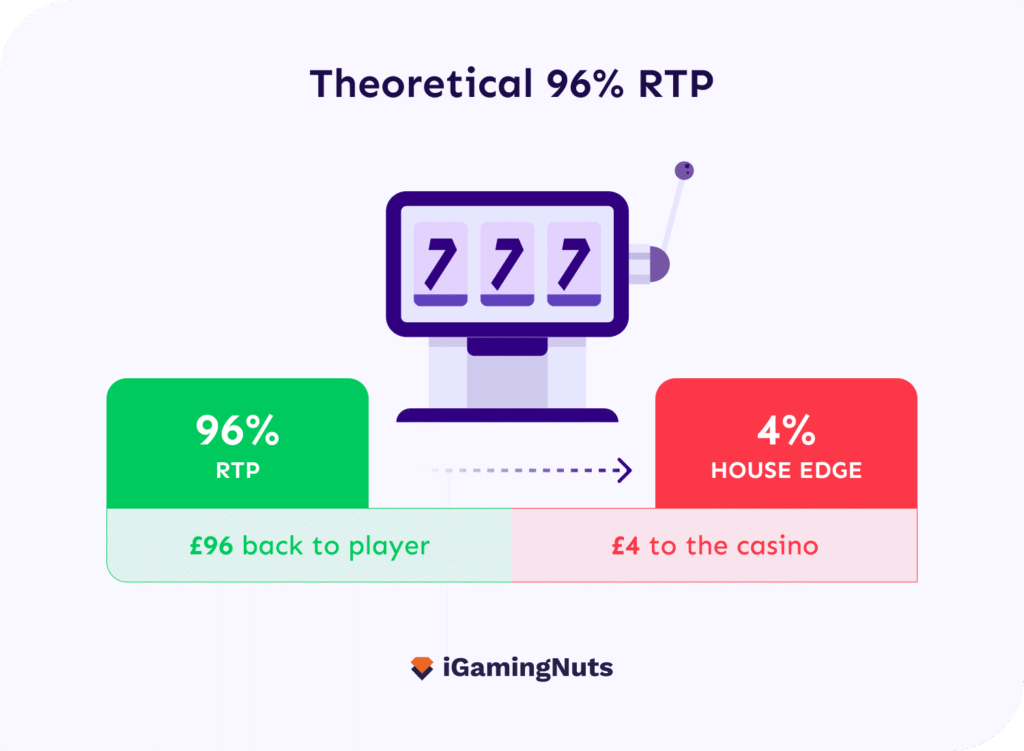
For example, a slot with a 96% RTP (Return to Player) has a 4% house edge. In practical terms, that means that for every £100 wagered on the game over the long run, the casino expects to return around £4, while the player receives the remaining £96.
Every casino game is designed with an advantage for the house. It’s how casinos stay in business! The payouts are slightly lower than the true odds of winning, which allows players to win occasionally in the short term, but ensures the casino maintains a long-term profit. In other words, while the house edge makes sure the casino wins in a long run, the RNG ensures that every time you spin, the outcome is fair.
So, when it comes to house edge, slots aren’t controlled in the sense of being fraudulent or secretly manipulated. They are openly configured to give the casino a long term advantage. However, that doesn’t mean you can’t win.
How Do Slot Machines Determine Outcomes?
To understand how slot machines determine outcomes, explaining the Random Number Generator (RNG) is crucial.
RNG is a software algorithm used in casino games to produce random outcomes. It continuously produces numbers at high speed, each corresponding to a possible symbol combination on the reels. No matter if the slot game is online or physical, they both rely on it.
The process of generating outcomes happens independently for every spin. Previous results do not influence future ones, and players cannot predict or control the outcome. This automatically disproves the claim that there are hot and cold slot games, meaning that some of them have more frequent or less frequent payouts.
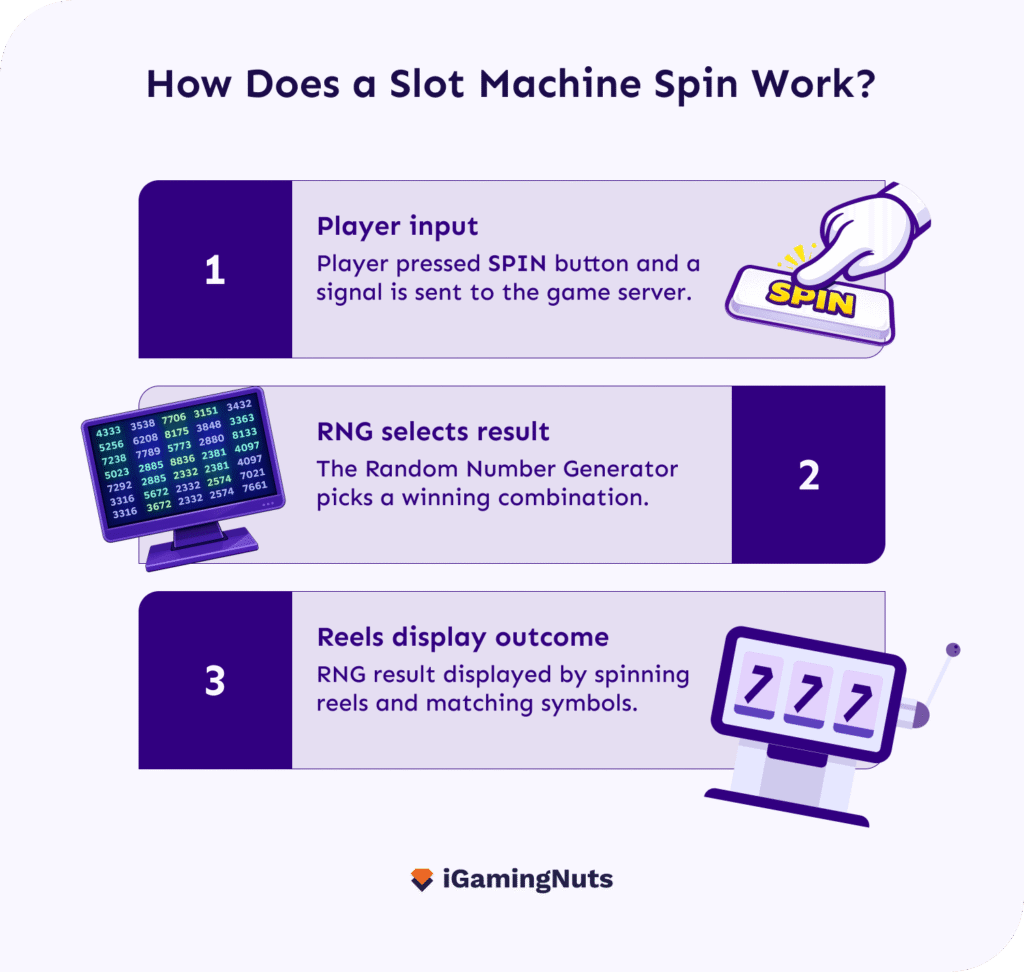
Because of the RNG system, every spin is random and independent, which means there is no pattern that players or casinos can use to influence results.
Can Outcomes Be Manipulated?
Casinos cannot manipulate or predict the outcome of slot machine play, since the role of RNG is to ensure complete fairness.
The RNG software embedded in every certified slot machine is independently tested and audited by third-party organizations. This is completed before a game ever reaches players, especially when those games come from established slot providers.
These audits verify that outcomes are completely random and that the game’s actual RTP matches what is advertised. Regulatory bodies require casinos to possess compliance certifications, which means that casinos may lose their operating license if any manipulation is detected.
In case a casino wants to apply any changes to a slot game (whether to adjust how often it pays out, how bonus features are triggered, or how the math is structured), they have to go through the full testing and approval process before the game goes live.
Why Slots Feel Unpredictable: RTP, Volatility, and Perceived Fairness
RTP and Volatility are the two mechanics behind every slot game. These are rarely explained to players, but are responsible for how fair or unfair a game seems in the short term. Let’s look at these in detail:
RTP (Return to Player)
RTP represents the percentage of all wagered money a slot is designed to return over millions of spins. Most online slots will have an RTP of 95 – 98%. In simple terms, that means, on average, players will win £95 – £98 for every £100 wagered.
These numbers sound reassuring, but they say nothing about what happens in one session, which could fall dramatically above or below that figure. Slot game design ensures that, while players can win or lose in an individual session, the overall return matches the expected percentage in the long-term.
Although RTP is a long-term metric, some players still use it as a gauge when choosing which slot to play. To try and maximise their potential returns over time, they look for the highest RTP slots in the slot catalogue. However, most players have a limited budget so they only experience a small part of the game. It is, therefore, unlikely that they’ll experience the true RTP of a game in just one or two sessions.
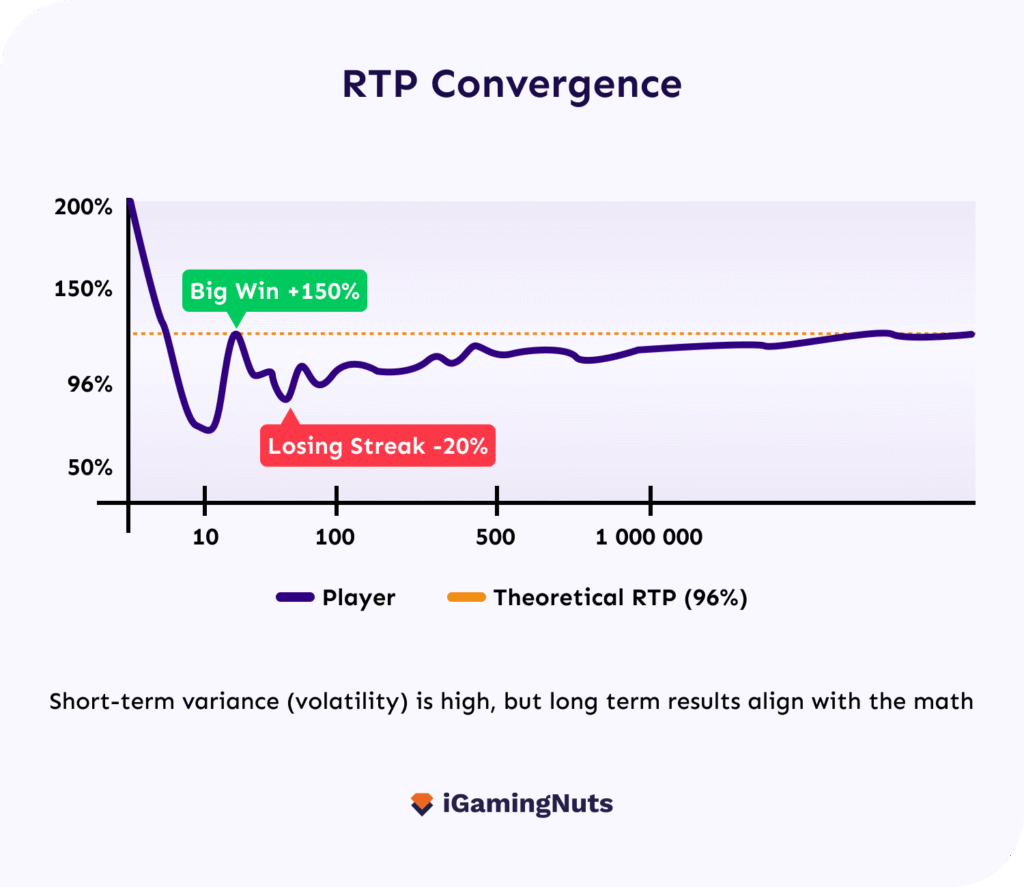
On high volatility slots wins occur less often, so players may lose a significant amount before landing a major payout, which can feel unfair and unpredictable. In reality, this is not a flaw or rigging, it’s simply how the game’s random mechanics and long-term RTP work together.
Volatility
Slot volatility determines how often a slot machine is expected to pay out.
Low volatility slots pay smaller amounts more frequently, while high volatility slots pay higher amounts less frequently.
The gap between how slots actually work and how they feel to players is where the perception of unfairness comes from. It has nothing to do with ‘are slots rigged?’, it’s more about how slot mechanics can influence perception to a player.
Common Misconceptions and Myths about Slot Machines
Many players believe slots can be manipulated, but this belief usually comes from misunderstandings of how slot machines work. Beyond the familiar notions of ‘hot’ and ‘cold’ machines or payout cycles, several other misconceptions are widespread. Let’s get into them:
❎Higher bets improve chances of winning
Players often think that increasing their stake will increase their odds, when in reality understanding how slot strategy works matters far more than simply betting more. In reality, it only changes the potential size of a win. Every spin is independent, and the probability of winning is fixed by the RNG.
❎Wins are more likely at certain times
Some players believe slots pay out more in the morning, evening, or during busy casino hours. The outcome of each spin does not depend on time; the RNG is here to ensure randomness at every moment.
❎The myth of ‘hot’ and ‘cold’ streaks
This is a classic example of the gambler’s fallacy, and probably the most common misconception of all. ‘Hot streaks’ refers to a slot that has paid out several times in a short period of time. ‘Cold streaks,’ on the other hand, is when it has not paid out for a long time. Those conclusions are based on anecdotal evidence. Slot machines do not have memory, so past results do not affect future spins.
❎Casinos can manipulate payouts
While some fear that operators can remotely control machines, regulated slots have fixed RTP set in the software. The casino cannot adjust results during play without violating rules.
❎External factors can influence outcomes
In land-based slots factors such as using loyalty cards, the physical location of the machine, or even the money used, do not have any influence on the results. The same is true of online slots, where previous results or frequency of play cannot impact potential returns. Most of these misconceptions come from superstitions. All outcomes are governed by the RNG, independent of the mentioned factors.
❎Bonus features change win odds
Misconceptions often arise regarding bonus features; however, using free spins bonuses or triggering in-game bonus rounds does not alter the underlying RNG probabilities.
Summary: Are Slots Rigged?
Although slots are designed to work in the casino’s favour over time, the answer to the question ‘are slots rigged?’ is no. Every spin is random thanks to Random Number Generators (RNGs), so we cannot say that casinos manipulate their outcomes in any way and past results don’t influence future ones. The house edge ensures the casino makes a profit in the long run, while volatility affects how often and how big the wins can be.
Understanding this is crucial for every player and doesn’t ruin the fun, but it sets the expectation: you’re playing for entertainment, not guaranteed wins.
ℹ️Responsible Gaming
Understanding that slots are games of chance is the first step towards safer gambling habits. Always play for entertainment and set limits before you begin.
FAQs
Can casinos secretly adjust payouts during play to ensure losses?
Casinos cannot secretly adjust payouts during play, especially in licenced, regulated casinos. RTPs are set in the machine’s software before deployment and a gaming authority must approve them. Changing them requires a formal process which is heavily regulated.
Do “near misses” on slots prove they’re manipulated?
No, near misses don’t prove manipulation. Near misses happen because of how symbols are arranged on slot reels. When the RNG selects reel positions, losing combinations naturally appear close to a win, such as a bonus symbol landing just above or below the payline. While these are regular losing outcomes, they are a key part of slot machine psychology, as they influence how players perceive their proximity to a win.
What’s the difference between RNG fairness and house edge?
RNG fairness means each spin is statistically independent and produces genuine random outcomes.
House edge is the mathematical guarantee built into the game’s design, which ensures casinos gain profit in the long run.
Do slot machines pay out more at certain times of the day?
No, slot machines do not pay out more at certain times of the day. There is no mechanism by which a certified slot machine changes its RTP based on time of day, day of week, or casino traffic.
How do gaming authorities test and audit slot machines?
Gaming authorities require slot machines to be tested and certified by independent laboratories before they can go live. These labs check the RNG, math model, payout percentages (RTP), and bonus features to ensure they operate as specified.
After approval, authorities may perform periodic audits to verify ongoing compliance, confirm that software hasn’t been altered, and ensure the games remain fair and random for players.
How can I become familiar with slot mechanics without risking money?
Many players choose to use free online slots to understand a game’s volatility and bonus features before playing with real funds. These ‘demo’ versions use the exact same RNG and mathematical models as the paid versions to ensure a consistent experience. They are ideal for beginners as they allow you to get accustomed to the gameplay pace and payout frequency in a risk-free way.