


The Luckiest Numbers in the United Kingdom

As the festive lottery draws approach, many players look for any edge or “lucky” pattern in the numbers.
In this article, we’ve analysed official UK Lotto and EuroMillions data from 2015 until today to provide a detailed view of the luckiest balls, but before we dive into the statistics, let us say a few words about the idea of numbers and the luck it’s believed they bring.
Lucky vs Unlucky Numbers
A survey from 2025, based on a survey of 2,000 UK adults by Lottoland, explores which numbers people in Britain consider lucky. The number 7 ranks as the most popular number, followed by 5. Surprisingly, the traditional unlucky number 13 holds the third place.
The survey also looks at how people use these numbers in real life, whether in lottery tickets, online passwords, etc.
So what makes a number lucky or unlucky?
It is often a mix of cultural baggage, meaningful dates like birthdays and anniversaries, and collective superstition. For some, it’s about comfort and even control; for others, it’s more ritualistic – a way to invite good luck or avoid misfortune.
Methodology
To understand which numbers show up most often and which ones haven’t appeared in a while, we dug into the UK lottery and several public lottery-statistics sources. This includes analysing every UK Lotto draws from 2015 up to November 2025, covering a decade of results.
Because the Lotto changed in 2015, expanding from 49 to 59 balls, our core findings focus on the current format. In practical terms, we looked at:
- How frequently each main ball has appeared
- Which numbers are currently “overdue” (longest gap since last drawn)
- Repeating pairs or triplets that show up more often than others.
UK Lotto: Top Most Popular Single Numbers
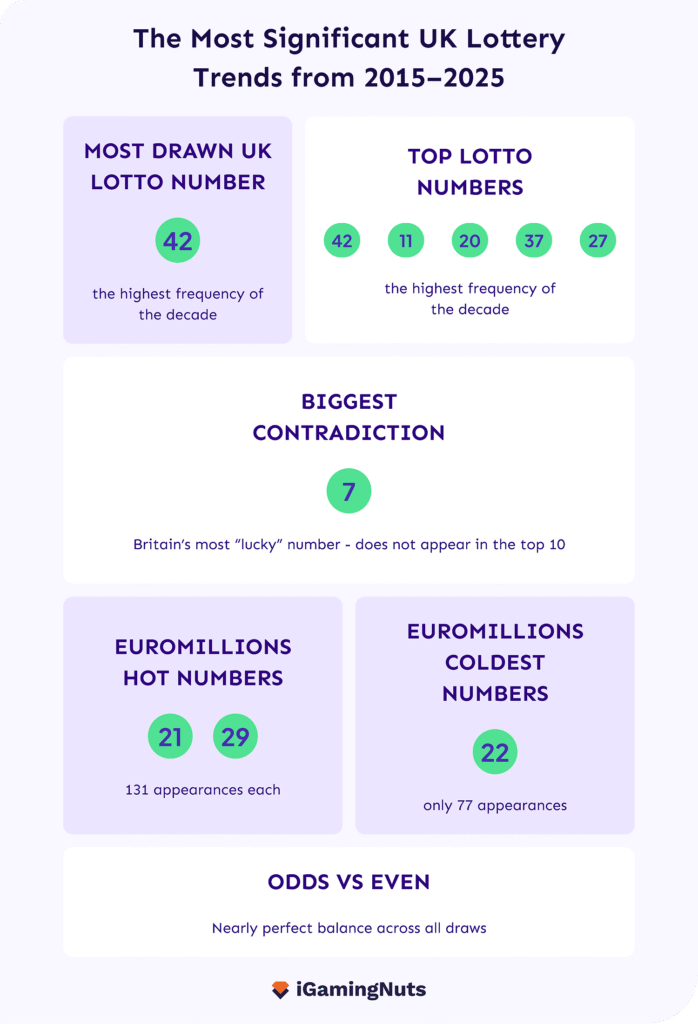
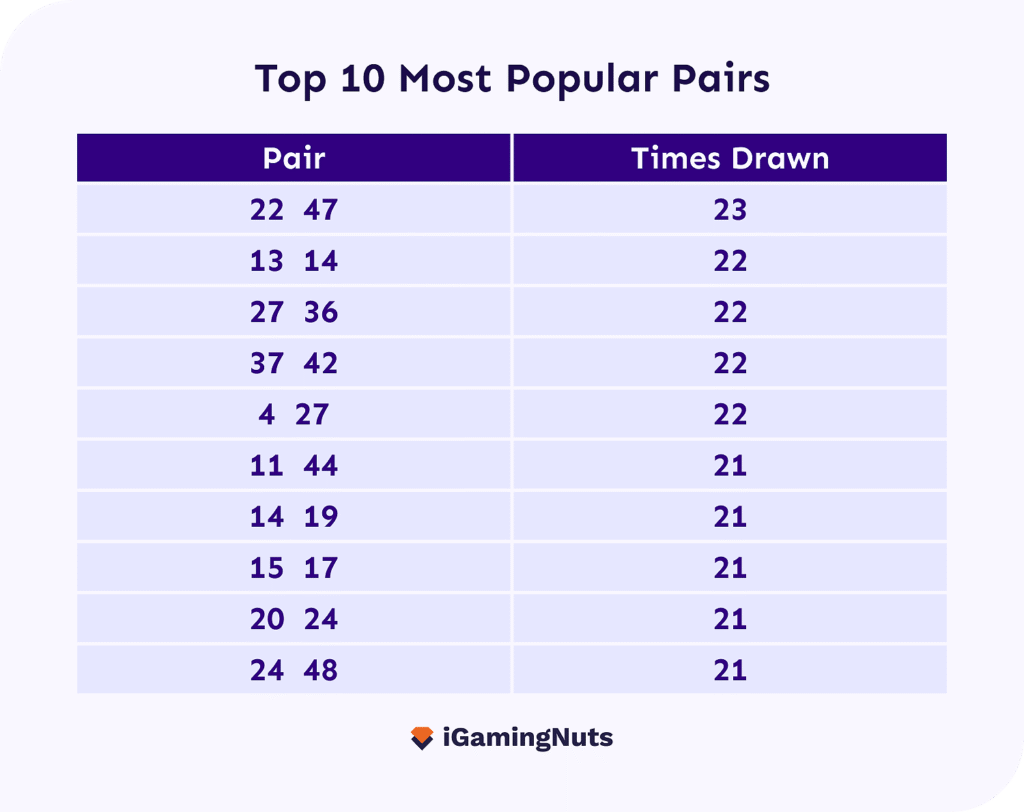
The following numbers 42, 11, 20, 37, 27, 39, 41, 8, 35, and 36 have been drawn more frequently than others, with 42 topping the list at 159 appearances. While this doesn’t make them magically luckier (all draws are random), it shows that some numbers have historically appeared more often than others in UK Lotto draws. Let’s see the full number of draws for single numbers and pairs:

Top 10 Most Popular Pairs
What conclusions can we draw from this?
Numbers in the low to mid-range, like 8, 11, 20, 27, are common picks, likely reflecting cultural habits like birthdays and anniversaries.
Among the 23 most frequently drawn numbers, odd numbers (12) only slightly outnumber even numbers (11), so there isn’t a strong skew toward either. This subtlety actually reflects the random nature of the Lotto: odd and even numbers tend to balance out.Let’s not forget that even though these hot numbers appear more often historically, lottery draws are still random. There’s no guarantee that frequently drawn numbers will continue to appear more often in the future, nor that low-frequency numbers won’t. The data is interesting for trend spotting but doesn’t influence actual odds.
On the other hand, numerous articles, including Scotsman.com, say that the number seven is widely considered the UK’s luckiest number based on cultural superstition and general public opinion, with about 25% of people claiming it as their personal lucky number. Why it doesn’t rank among the top 10, we can’t say. Obviously, the statistics don’t always match reality.
EuroMillions: Hot and Cold Numbers
As a lottery game, EuroMillions was introduced back in 2004. It can now be played in the UK and a few other countries.
Some EuroMillions players track “hot” and “cold” numbers, even though every draw is statistically independent. Still, the data since 2015 reveals clear favourites: 21 and 29 have each appeared 131 times, making them the hottest picks.
On the opposite side, 22 has shown up only 77 times, which makes it one of the coldest numbers of the game.

Lucky Charms: Mixing Superstition with Lotto Picks
Surveys also show that superstition and luck remain part of everyday life for many Brits. According to a 2023 poll by YouGov, around 34% of Britons describe themselves as “very” or “somewhat” superstitious.
Psychologists note that charms offer a sense of control in games, which is why they’re so closely linked to lottery habits.
The bottom line is that when picking the Lotto numbers, many people combine both modern statistics with old‑fashioned superstition, and rely on the belief that the right number can bring extra luck, whether by chance or charm.
Final Words
Our analysis shows that some numbers in UK Lotto and EuroMillions have appeared far more often than others, but the overall patterns still point to what the lottery truly is: a game of chance. Even though numbers like 42, 11, 20, and EuroMillions favourites 21 and 29 have strong repeated showings, their past performance doesn’t influence future draws. Another strong proof for that is that odd and even numbers appear in almost perfect balance.
The data also reveals how people use numbers, which is just as interesting. When choosing their picks, Brits continue to rely on a mix of statistics, personal rituals, and superstitions. Players often follow their gut, like birthdays, favourite numbers, or whatever’s been trending, which says more about how we think than how the lottery works.